Protect
Use the level of protection the product actually needs: no less, no more.
We design packaging around four priorities: product protection, lower transport volume, simpler material structures and practical compliance readiness. The goal is not more packaging. The goal is better packaging.
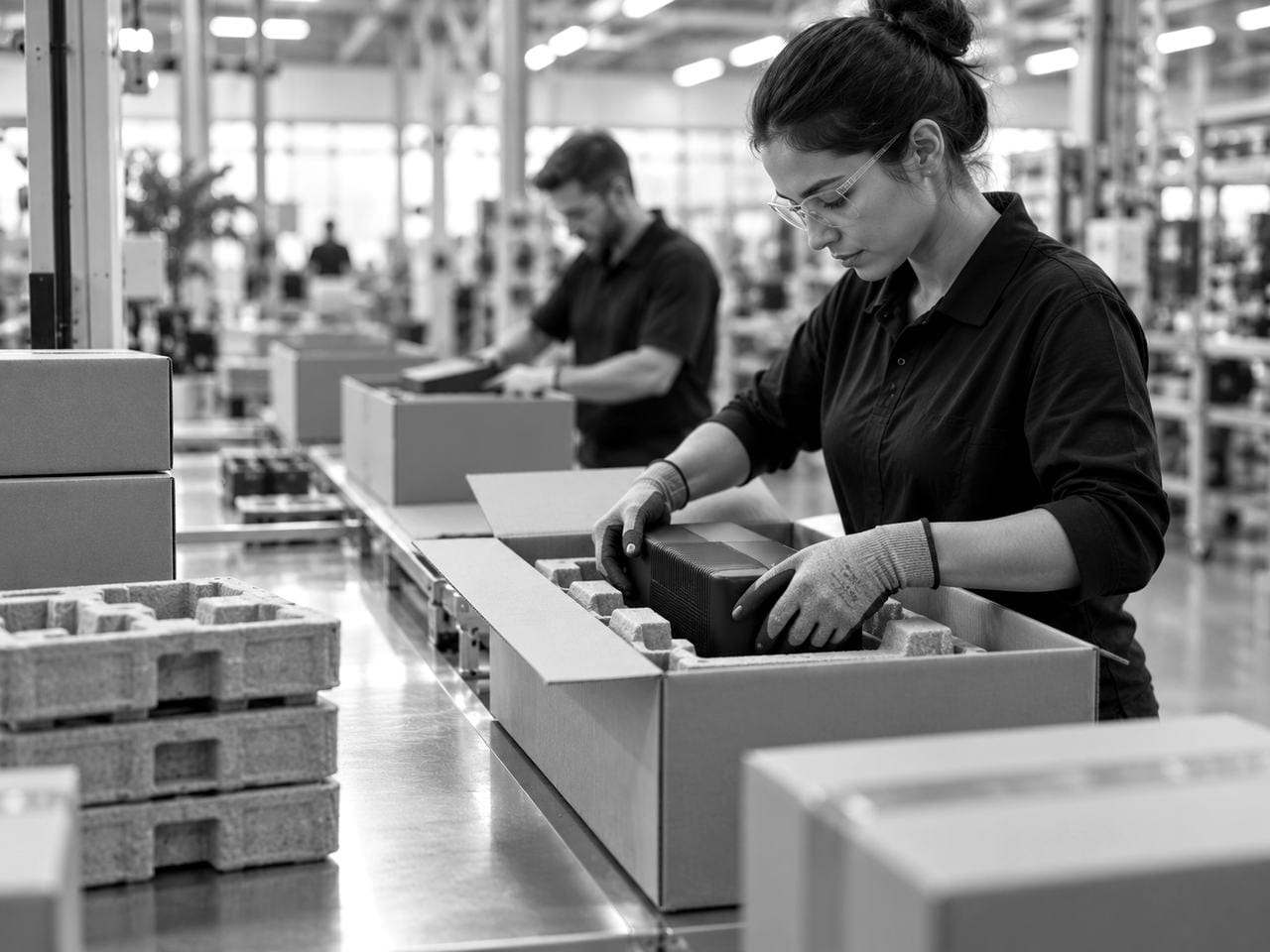
We review product protection, packed volume, material choices and destination-market requirements together.
Use the level of protection the product actually needs: no less, no more.
Reduce empty space, unnecessary layers and avoidable carton volume.
Prefer paper-based or mono-material solutions where technically appropriate.
Support decisions with material specs, declarations and traceability where required.
Compare the same order with two packaging layouts. Adjust carton quantities and container type to see how dimensions affect loading. These are illustrative estimates, not a confirmed loading plan.
This is usually the first thing a practical buyer cares about. We redesign carton dimensions, internal layout and packing sequence to improve space usage without sacrificing transport safety.
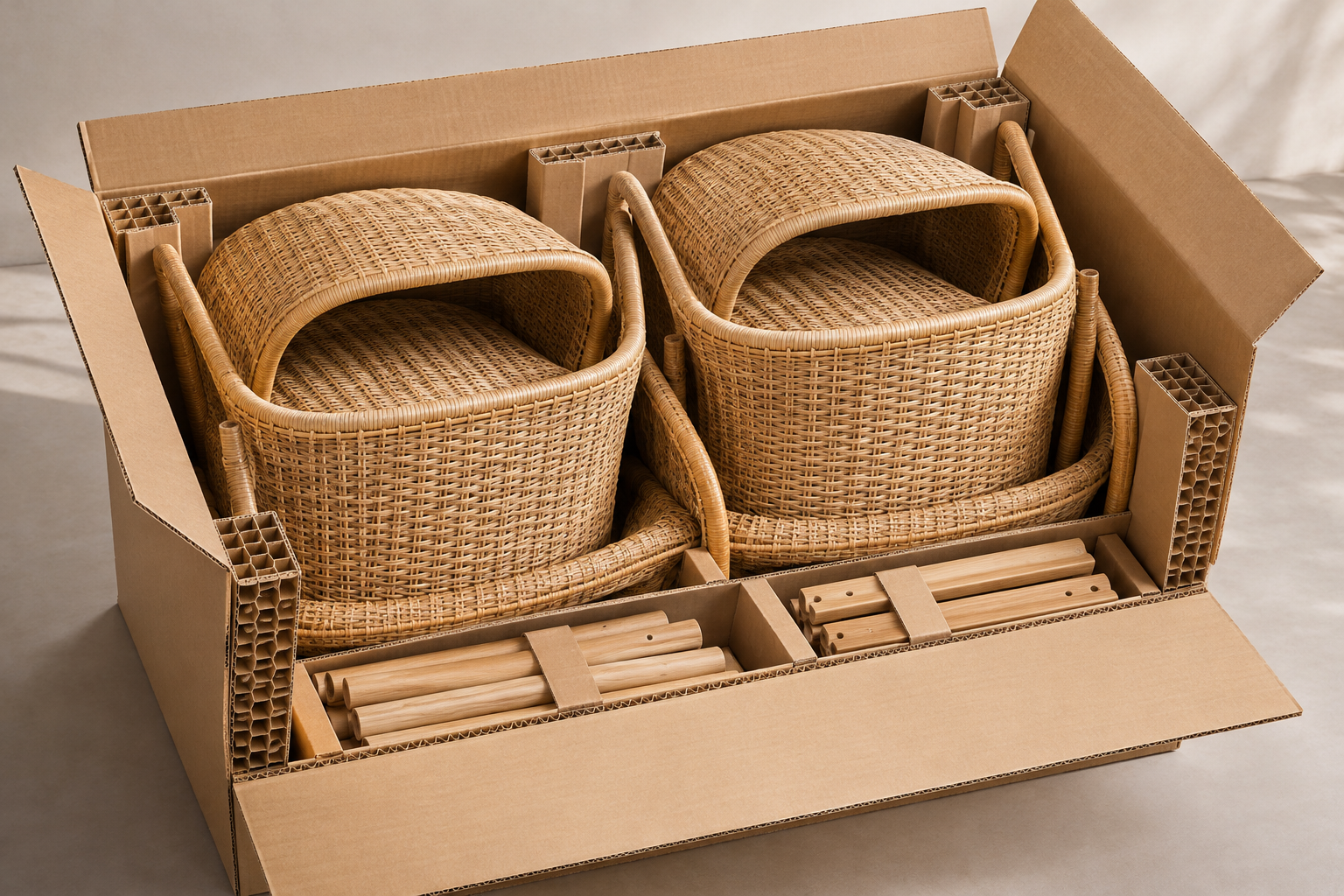
Match the pack to the product instead of hiding empty volume inside oversized cartons.
Rework inserts, folding sequence and part placement to remove avoidable gaps.
Use real numbers such as carton size, CBM per unit and units per pallet or container.
Good packaging engineering can reduce loading inefficiency and help the client pay for less air.
Not every project needs the same packaging specification. A simple baseline keeps things realistic. Higher-spec options are available when the market, the customer or the product requires them.
Built for product protection, efficient dimensions and straightforward export packaging.
Use upgraded materials, recycled content and additional documentation where they make technical and commercial sense.
Compare paper-based packaging, mono-material plastics and recycled-content options against your product’s protection needs.
Paper-based structures are often a natural fit for furniture, garden, DIY and household products.
When dust, moisture or abrasion protection is needed, simpler mono-material structures are preferred where technically appropriate.
PE with 35% post-consumer recycled content is an option for selected projects, subject to supply, documentation and packaging performance checks.
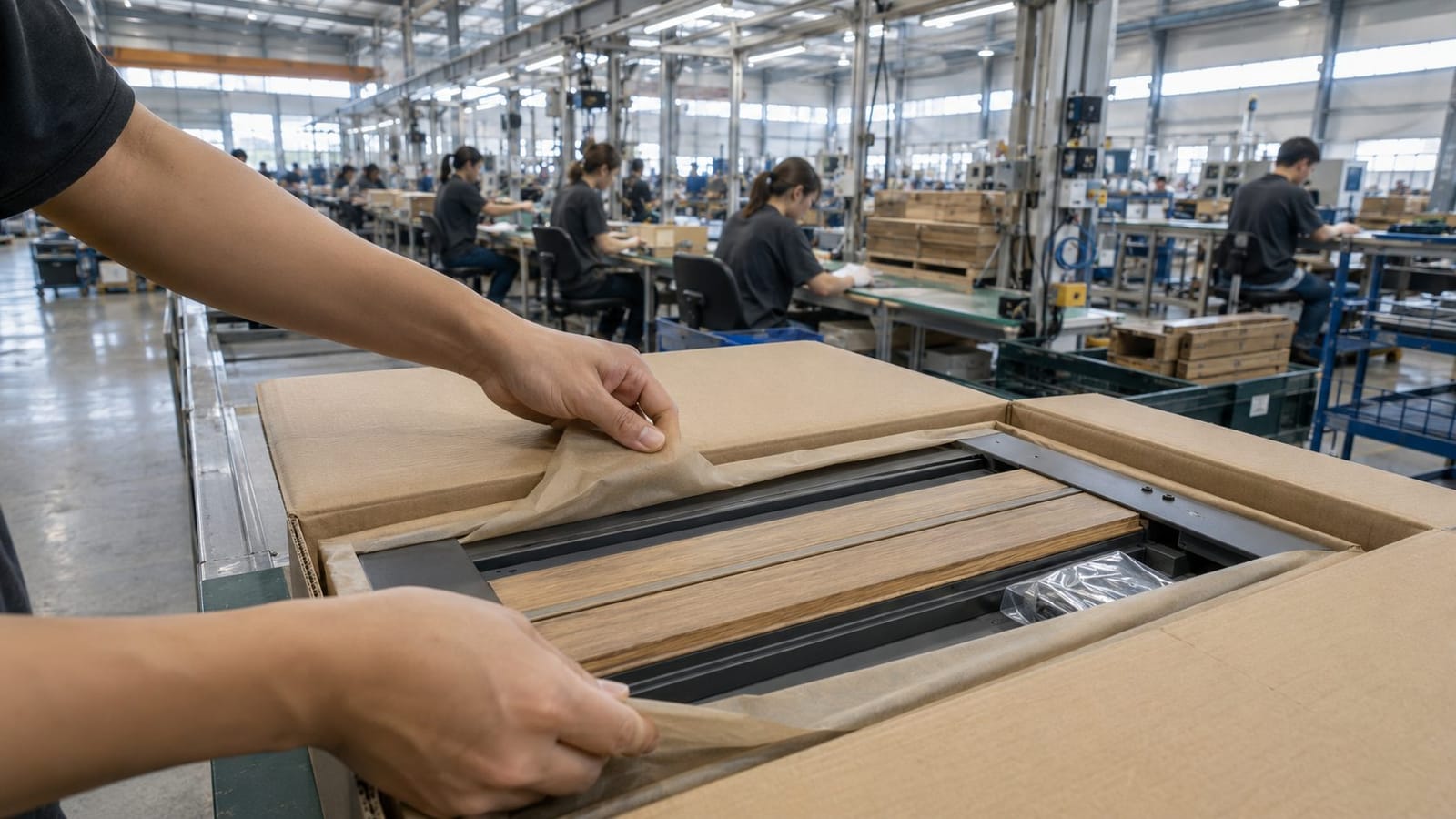
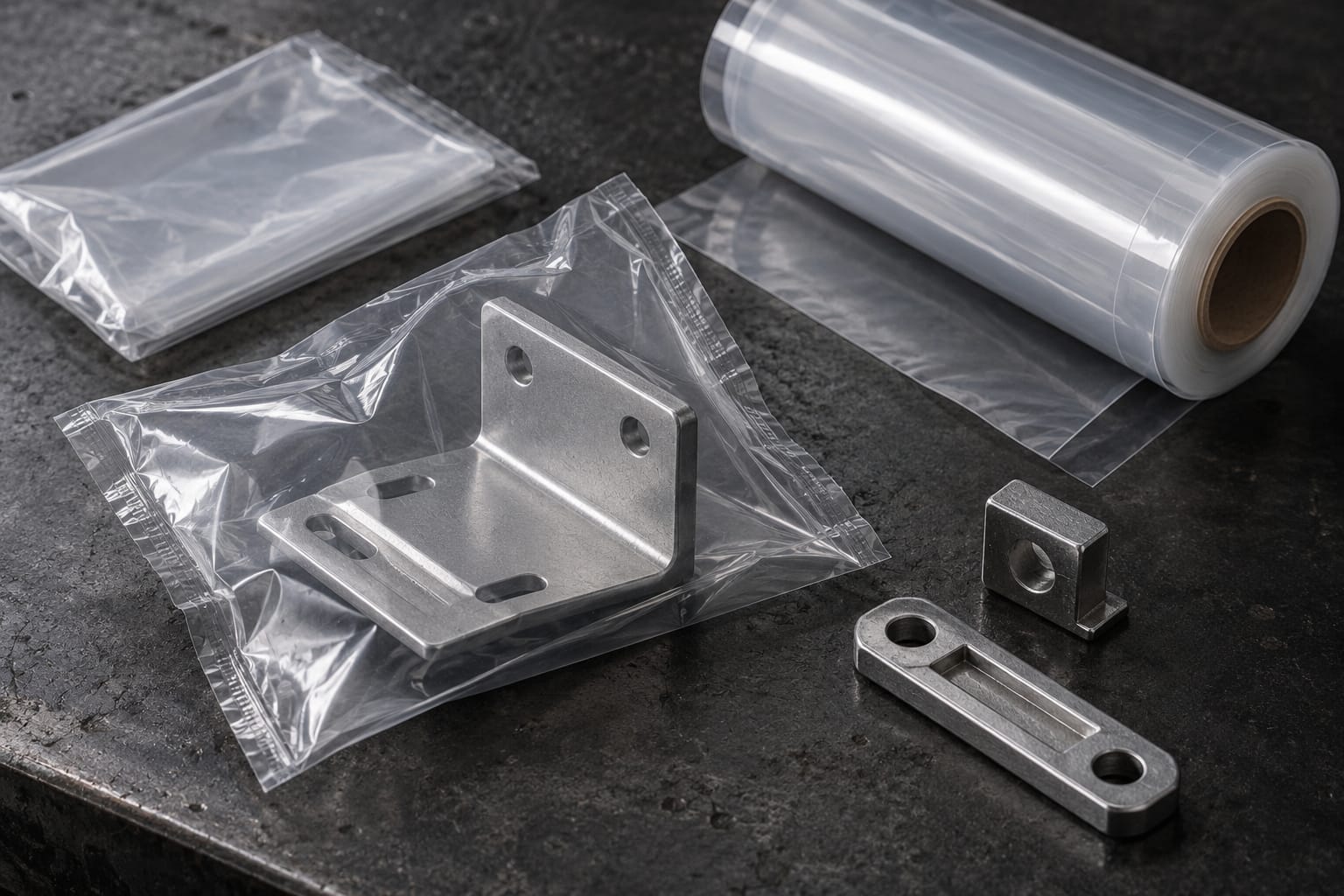
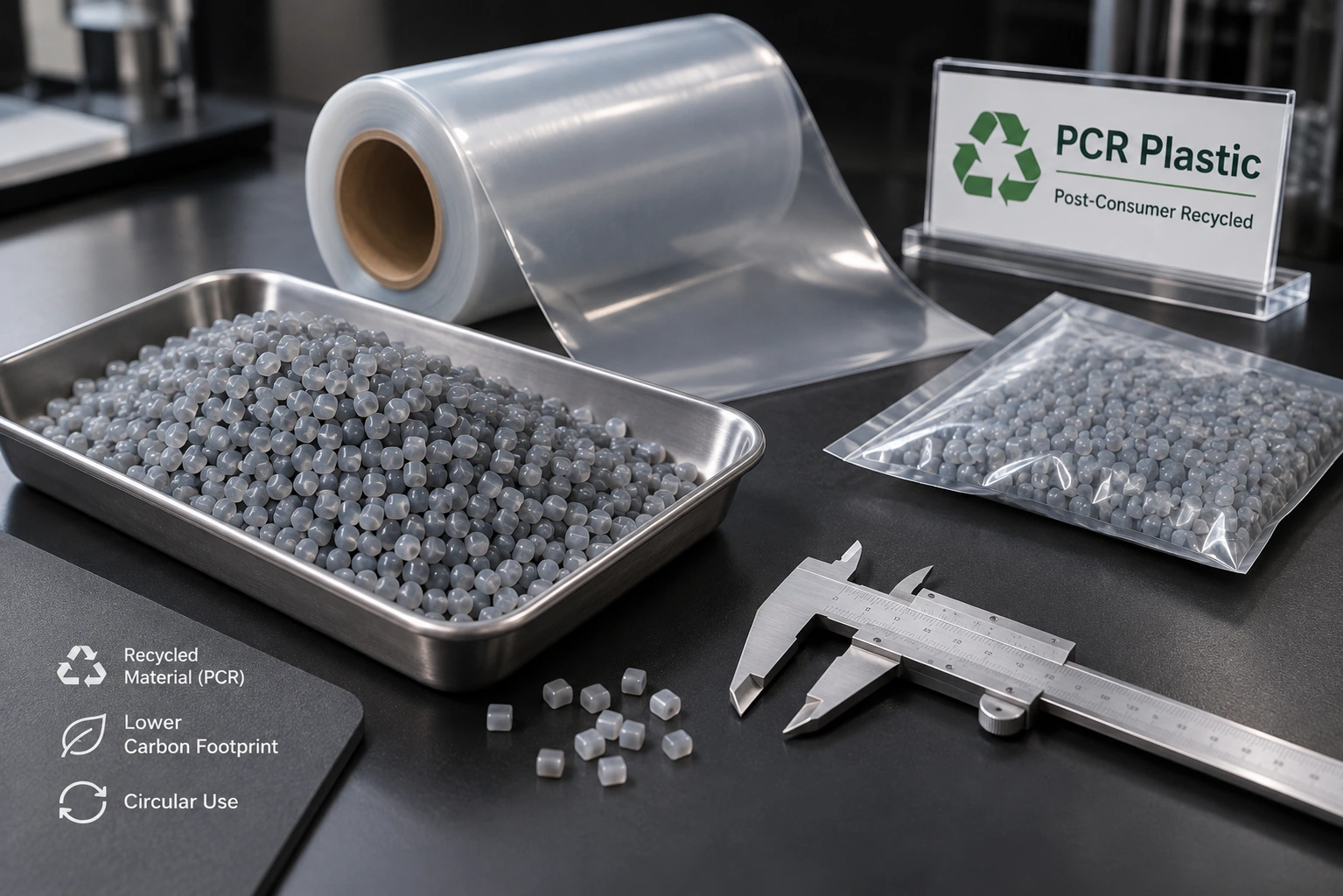
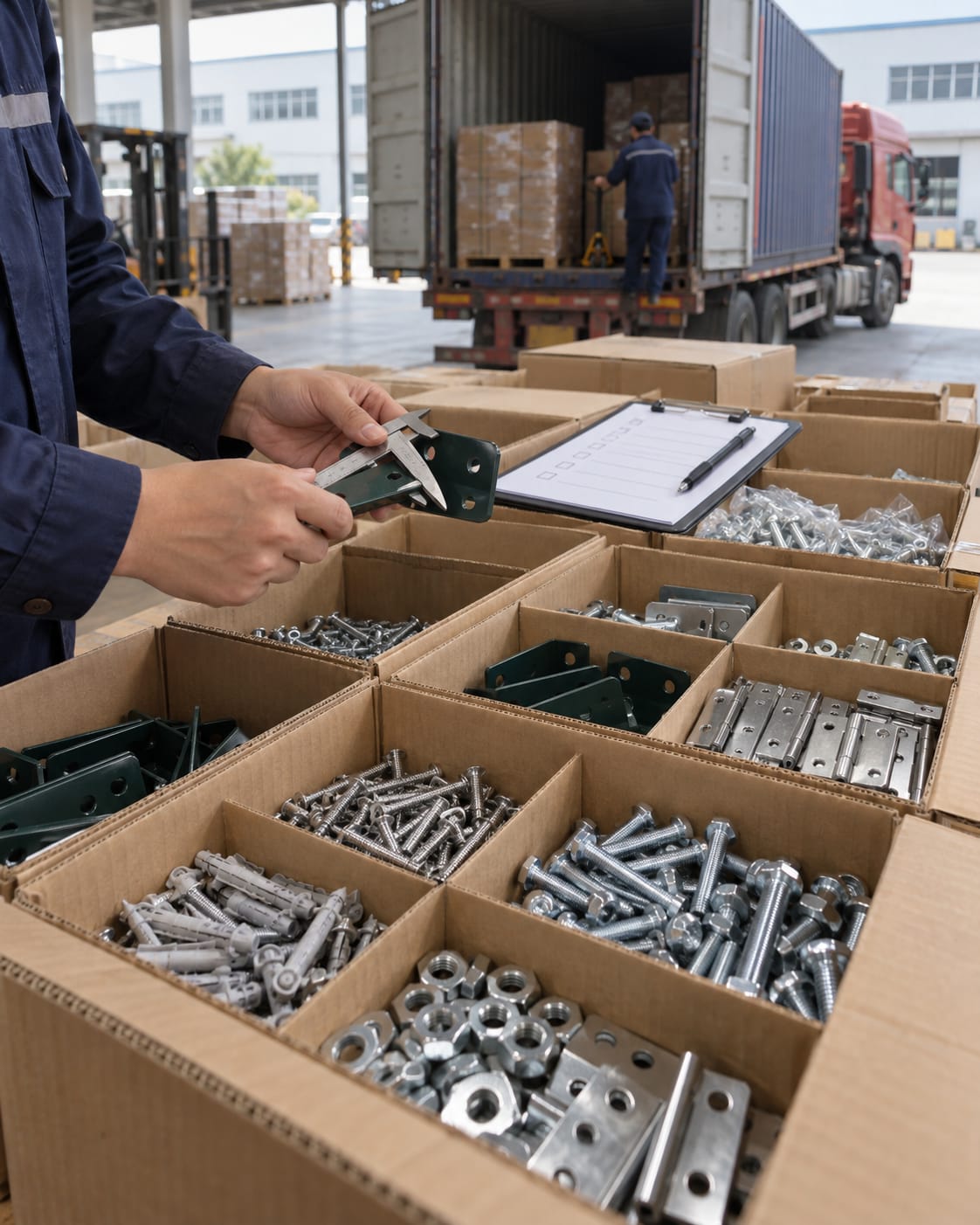
We discuss recyclability, material reduction, recycled content and substance documentation as part of your project’s packaging requirements.
Reduce unnecessary packaging layers and avoidable empty space.
Prefer paper-based or mono-material designs where technically suitable.
Use recycled-content plastic options such as 35% PCR PE where appropriate.
Certified or recycled fibre options can be specified for paper packaging.
Material declarations and substances control are considered where applicable.
Support the project with practical records, declarations and traceability evidence.
For your project, specifications are confirmed per project and aligned to market requirements.
We can discuss protection needs, packaging volume, material options, recycled-content targets and documentation requirements before production starts.
Talk about your packaging requirement →